
From Parkrun to the Alps: What Sophie Grant's Record-Breaking Run Teaches Every Woman About Starting — and Never Stopping
She didn't grow up as a runner. She got her parents to write notes to excuse her from cross-country at school. She took up running to lose weight, shuffling around London for fifte
 By Mel Berry · 25 August 2026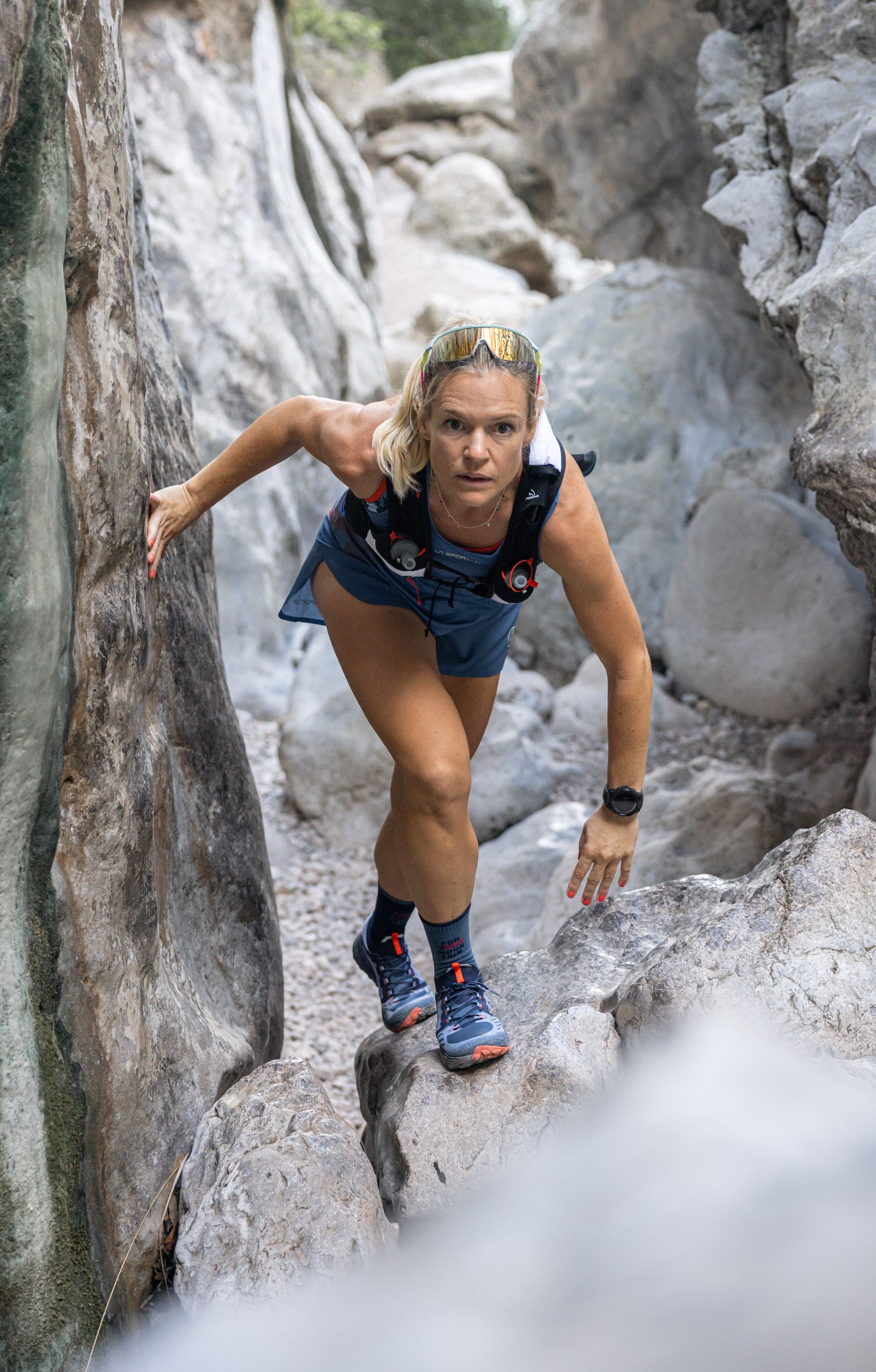
She didn’t grow up as a runner. She got her parents to write notes to excuse her from cross-country at school. She took up running to lose weight, shuffling around London for fifteen minutes at a time. And then, just over a decade later, Sophie Grant became the fastest human being — man or woman — to ever cross the Alps on foot.
Twenty-eight days. Seventeen hours. Two thousand kilometres. The equivalent of climbing Everest from sea level twelve times. A women’s record smashed by more than a week. The men’s record, gone too.
If that doesn’t make you want to lace up your shoes, we’re not sure what will. But here’s the thing: Sophie’s story isn’t really about elite performance. It’s about what happens when a woman decides to back herself — and keeps doing it, consistently, over years.
You Don’t Have to Love Every Single Run
One of the most honest things Sophie has said about her training is this: she didn’t always want to go out the door. Not every run felt magical. Living in London, training in the early mornings, showing up when she didn’t feel like it — that’s what actually built her into the athlete she is today.
Consistency, not occasional brilliance, is the foundation. If you’re new to running, or returning after a break, this matters enormously. You don’t need a perfect training plan, ideal conditions or a particularly inspiring morning. You just need to go. Fifteen minutes counts. A slow shuffle around the block counts. Years of those add up to something extraordinary.
Carbohydrates Are Not the Enemy — They’re the Engine
During her Via Alpina record, Sophie was consuming six to seven thousand calories a day: high-carb sports drinks, gels, energy chews, pasta, fried rice, burritos, and the occasional magnum slushie. Not a single almond in sight.
She’s been vocal for years about the damage done by the “fuel off fat” narrative that many women absorbed in the early days of ultra running. Carbohydrates are the body’s preferred fuel for sustained effort, and under-fuelling doesn’t just slow you down on race day — it tanks your recovery, your training consistency, and frankly, your enjoyment of the whole thing.
For anyone starting out in endurance running, this is worth hearing early. Fuel your runs. Eat before, during and after. Natural energy bars and energy chews are a good place to start for anything over an hour, and overnight oats make an easy, carbohydrate-rich pre-run breakfast that requires almost no effort the morning of a long effort.
Strength Work First — Then the Run
Sophie credits strength training as a key pillar of her resilience. And she passes on advice she heard from another elite athlete: do your strength work first, before the run, because if you leave it until after, you’ll always find a reason to skip it.
You don’t need to lift heavy to see benefits. Any consistent strength work — bodyweight, resistance bands, light dumbbells — will improve your running economy, protect your joints and reduce injury risk. That’s especially relevant for women, given the well-documented importance of maintaining muscle mass across a lifetime of sport. Research highlighted at events like the Nike Women’s Global Sports Summit continues to reinforce just how important strength training is for female athletes at every level.
Look After Your Feet Like They’re Your Most Important Kit
Because they are. Sophie spent 28 days removing every stone from her shoes the moment she felt it, re-lubing her feet regularly with a lanolin-based balm, changing her socks frequently and checking for any signs of damage at every crew stop. The result? The best her feet had ever been at the end of a major effort.
For anyone building up their mileage, the lesson is simple: don’t wait for blisters to appear before you take action. Invest in well-fitted trail or road shoes (they should feel comfortable immediately, not “after a few runs”), wear technical running socks, and use an anti-chafe balm from the very start of longer efforts. Prevention is dramatically easier than treatment.
Surround Yourself With People Who Believe You Can
Sophie is clear that one of the greatest gifts in her life has been people who told her yes when she doubted herself. Her crew on Via Alpina — her husband George, photographer Zoe, friends who turned up in week three with energy and laughter — kept her moving as much as any training session did.
When you’re getting into running, community matters. A training partner, a local club, an online group of women working towards similar goals — these things aren’t extras. They’re infrastructure. Find your people early.
You Are Far More Capable Than You Think
Perhaps the most important thing Sophie’s story offers women at any stage of their running journey is this: the gap between who you think you are and what you’re capable of is enormous. She hated cross-country as a teenager. She started running to lose weight in her twenties. She is now the fastest person alive to have run the length of the Alps.
The journey between those two points wasn’t a straight line, and it wasn’t always easy. It was built on small, consistent decisions — to show up, to fuel well, to ask for support, to try the scary thing even without certainty of success.
Whatever your version of the Alps looks like — a first 5K, a local trail race, a longer adventure you’ve been quietly thinking about — it starts the same way Sophie’s did. One shuffle around the block. Then another.
You’ve absolutely got this.
More from the blog
Never miss a women-first review
Independent reviews, real-world testing and the best kit deals for active women — straight to your inbox. No spam, unsubscribe anytime.