
Mastering Ultra Running: How to Train Smart, Go the Distance and Tune Into Expert Advice
Ultra running is one of those pursuits that sounds impossibly daunting from the outside and then becomes utterly addictive the moment you cross your first finish line.
 By Mel Berry · 15 September 2026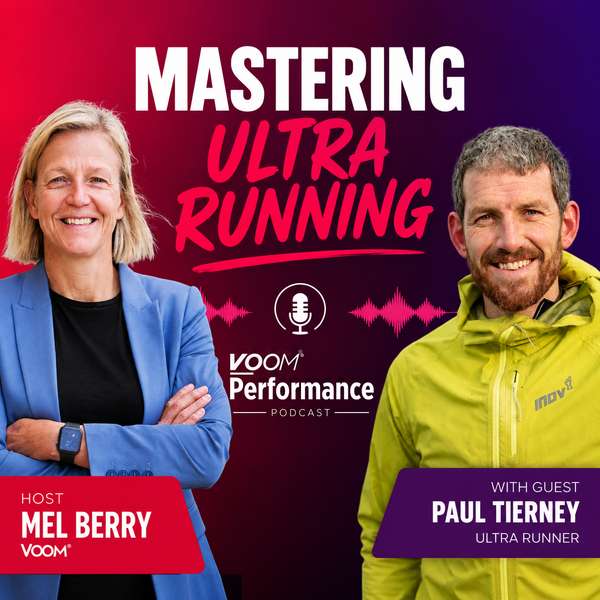
Ultra running is one of those pursuits that sounds impossibly daunting from the outside and then becomes utterly addictive the moment you cross your first finish line.
Whether you’re eyeing a 50K on rolling trails or dreaming of triple-digit kilometres through mountain terrain, the good news is this: ultra running is very much learnable. It rewards patience, consistency and smart preparation far more than raw speed or genetic talent.
If you want to go deep on the subject, one of the best things you can do right now is listen to the Voom Performance Podcast episode with ultra running legend Paul Tierney. Tierney is best known for completing the Wainwrights round in record time and shares genuinely grounding insights on pacing, mindset and what it actually takes to keep moving when everything in you wants to stop. It’s the kind of conversation that makes you want to lace up immediately.
Here’s what training for an ultra really involves, and how to approach it sensibly.
Build Your Base Before You Chase Distance
The most common mistake new ultra runners make is adding mileage too quickly. Your body and particularly the connective tissue in your feet, ankles and knees, needs time to adapt to sustained load. Before you think about back-to-back long runs or mountain recces, spend several months simply running consistently and comfortably.
A solid aerobic base means being able to run for 60–90 minutes at a conversational pace without feeling wrecked afterwards. If that’s not where you are yet, that’s your first goal. From there, increase your weekly mileage gradually, a rough guideline is to avoid increasing volume by more than 10% week on week, though listening to your body will always trump any formula.
Train on the Terrain You’ll Race On
Road miles are useful, but if your goal event is a trail ultra, you need to be training on trails. That means getting comfortable with uneven surfaces, navigating roots and rocks, and learning to hike efficiently on steep climbs. Hiking is not cheating in ultra running, it is strategy. The athletes who go furthest fastest are often those who know exactly when to walk.
Elevation gain matters enormously too. If your race has significant climbing, you need to be practising it. Time on feet on technical terrain teaches your body and your brain things that flat road running simply cannot.
Sort Your Nutrition Strategy Early
Fuelling for an ultra is genuinely different from fuelling a half marathon. You’ll be out for hours, possibly through the night, and your body’s relationship with food changes dramatically when you’re fatigued. Practising your race nutrition in training is non-negotiable.
The goal is to consume easily digestible calories consistently, rather than waiting until you’re bonking. Natural energy bars that sit well on a moving stomach are worth their weight — VOOM’s Pocket Rocket bars are a great option, designed specifically for endurance performance and easy digestion. Gels, chews and real food all have their place, and your long training runs are the time to figure out what works for you personally.
Hydration with electrolytes — not just plain water — becomes critical over long efforts, particularly in warmer months. Veloforte’s Passo Hydration Electrolyte Powder is worth keeping in your kit bag for both training and race day.
Prioritise Recovery as Much as Training
Ultra training breaks your body down repeatedly. What makes you stronger is how well you recover between sessions. Sleep, nutrition timing and active recovery days all matter.
Protein intake is often underestimated by endurance athletes — muscle repair and adaptation depend on it. A quality recovery shake after your hardest sessions can make a meaningful difference. U Perform’s Active Whey and Collagen is a solid choice for women specifically, combining muscle support with the connective tissue benefits that trail running demands.
It’s also worth being aware that female endurance athletes are particularly susceptible to iron deficiency — something that will quietly wreck your training before you even notice. Understanding your iron intake is essential if you’re logging serious hours on your feet.
Train Your Mind Alongside Your Body
Paul Tierney’s podcast episode is worth returning to specifically for his perspective on the mental game, because that’s where most ultra races are actually won or lost. There will be moments in every long event where your body sends you every signal to stop. Your ability to sit with discomfort, reframe the situation and keep moving forward is a skill — and it can be trained.
Practise this by deliberately doing runs that feel harder than necessary. Go out in poor weather. Run when you’re tired. Finish a session that isn’t going well rather than cutting it short. These moments build exactly the kind of resilience you’ll draw on at kilometre 80 when dawn is still hours away.
If you’re inspired by the racing side of ultra running, the UTMB 2026 guide is a brilliant place to witness what elite athletes are capable of — and to remind yourself what the sport can look like at its most spectacular.
Gear That Goes the Distance
Comfort over long efforts is everything. Anti-chafe products are non-negotiable — Body Glide For Her is a firm favourite among endurance athletes for a reason. A well-fitted technical running cap protects you on exposed ridgelines, and investing in quality leggings that don’t rub or slide — like the Bimble & Bolt Midnight Super Strider tights — will pay dividends over hours of movement.
Ultra running has a way of showing you exactly what you’re capable of and then showing you a little bit more. Start with the basics, respect the process, feed yourself well and lean into the community of knowledge around you. That Paul Tierney podcast is a brilliant first stop. The trails are waiting.
More from the blog


Never miss a women-first review
Independent reviews, real-world testing and the best kit deals for active women — straight to your inbox. No spam, unsubscribe anytime.