
Why do so many athletes struggle with nutrition despite understanding its importance?
You train consistently. You track your sessions. You're committed to getting better. So why does nutrition still feel like the one piece of the puzzle that never quite fits? You're
 By Mel Berry · 2 October 2026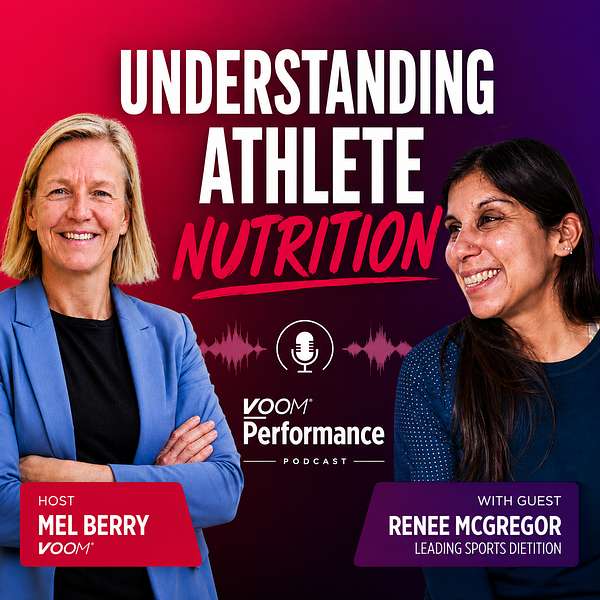
You train consistently. You track your sessions. You’re committed to getting better. So why does nutrition still feel like the one piece of the puzzle that never quite fits? You’re not alone. Even experienced, performance-focused women find that understanding nutrition in theory and actually applying it under the pressures of real life are two very different things.
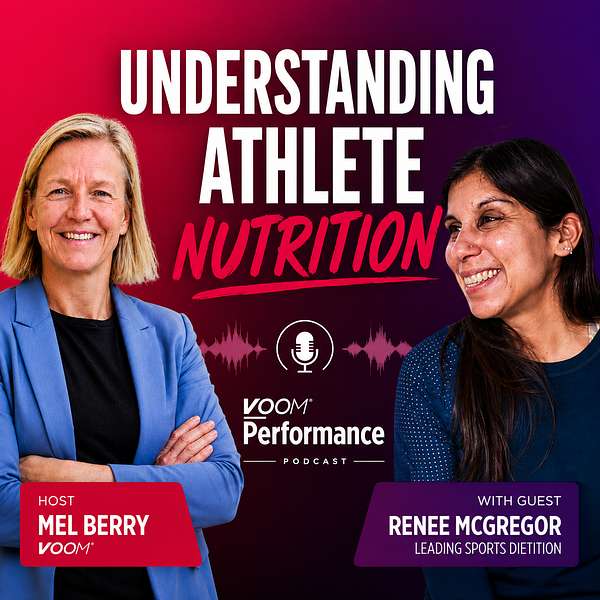
Sports dietitian Renee McGregor has spent years working at the sharp end of athlete nutrition — with elite competitors, endurance athletes and everyday active women — and her message is refreshingly honest: knowledge alone isn’t enough. In a brilliant episode of the Voom Performance Podcast hosted by co-founder Mel Berry, McGregor unpacks the real reasons so many athletes struggle to fuel themselves well, and offers practical strategies that can genuinely make a difference.
Here’s what we took away — and how you can start applying it today.
The Gap Between Knowing and Doing
Most active women aren’t short on nutrition information. The internet is overflowing with it. The problem, as McGregor explains, is that athletes often let external noise diet culture, aesthetic goals, social comparison override what their body actually needs to perform and recover.
This disconnect is particularly common among women, who can face enormous pressure to look a certain way while simultaneously trying to train hard. The result? Under-fuelling dressed up as discipline. It’s one of the most insidious traps in sport, and it rarely shows up as an obvious problem until performance begins to suffer — or health does.
Common Fuelling Mistakes That Hold Athletes Back
One of the most useful parts of the conversation is McGregor’s breakdown of the everyday errors she sees repeatedly. These include:
Skipping carbohydrates around training. Carbs remain the primary fuel source for moderate to high-intensity exercise, and cutting them — especially before or during sessions — leaves athletes running on empty. If your workouts feel harder than they should, this is often why.
Treating recovery nutrition as optional. The post-training window matters. Protein and carbohydrates consumed after exercise support muscle repair and glycogen replenishment. Skipping this step doesn’t save calories — it just slows your adaptation. A quality recovery option like the Voom Rapid Recovery Shake or a well-formulated protein powder such as U Perform Active Whey and Collagen can make this genuinely convenient.
Fuelling based on guilt rather than need. Eating more on heavy training days and less on rest days makes physiological sense — but many athletes do the opposite, restricting more when they feel sedentary and overeating reactively after long efforts. Learning to trust training-matched hunger is a skill worth developing.
Body Composition Myths That Deserve to Be Dropped
McGregor is direct about the body composition conversation in sport, and rightly so. The idea that being lighter automatically means being faster or fitter is not only oversimplified, it’s actively harmful for many athletes.
Lean muscle mass, bone density, hormonal health and energy availability all depend on adequate fuelling. When athletes chase a specific physique at the expense of these things, performance typically suffers in the medium term, and health can suffer in the long term. This is particularly relevant for women given the implications of low energy availability on hormonal function and bone health a topic also explored in the growing body of research championed by experts like Dr Stacy Sims.
The goal, as McGregor frames it, should be a body that functions brilliantly not one that fits a particular aesthetic ideal.
Practical Recovery Strategies You Can Actually Use
Recovery nutrition doesn’t have to be complicated. The fundamentals are consistent: prioritise protein to support muscle repair, replace carbohydrate to restore energy stores, and don’t underestimate hydration. Women, particularly endurance athletes should also be mindful of iron intake, which plays a critical role in oxygen transport and energy metabolism. Our article on why female endurance athletes should pay closer attention to their iron intake goes into this in useful detail.
For athletes who train early or struggle with appetite immediately after exercise, finding formats that work for you matters. A natural energy bar like the VOOM Pocket Rocket can bridge the gap between a session and a proper meal, while something like Veloforte’s Overnight Oats makes pre-training fuelling effortless even on rushed mornings.
Nutrition for the Long Game
Perhaps the most important takeaway from McGregor’s expertise is this: nutrition isn’t just about the next session. It’s about sustaining a life of activity, health and enjoyment over the long term.
That means making peace with eating enough. It means understanding that rest days require fuel too. It means building habits that are realistic and kind not punishing or rigid. Performance and wellbeing aren’t competing goals; with the right approach to nutrition, they reinforce each other.
Whether you’re training for your first 10k, deep into triathlon season or simply trying to feel better in your daily movement, getting your nutrition right is one of the highest-return investments you can make. Renee McGregor’s insights offer a grounded, evidence-informed starting point — free from the noise and far more useful than most of what you’ll find scrolling online.
Listen to the full podcast and let Mel Berry’s conversation with Renee be the thing that shifts how you think about food, performance and your body — for good.
More from the blog

Never miss a women-first review
Independent reviews, real-world testing and the best kit deals for active women — straight to your inbox. No spam, unsubscribe anytime.