
5 Sports Nutrition Red Lines Every Woman New to Ultra Running Must Know
The mountains around Chamonix have a way of pulling at something deep inside you. Every summer, thousands of runners from across the world descend on the French Alps for UTMB — the
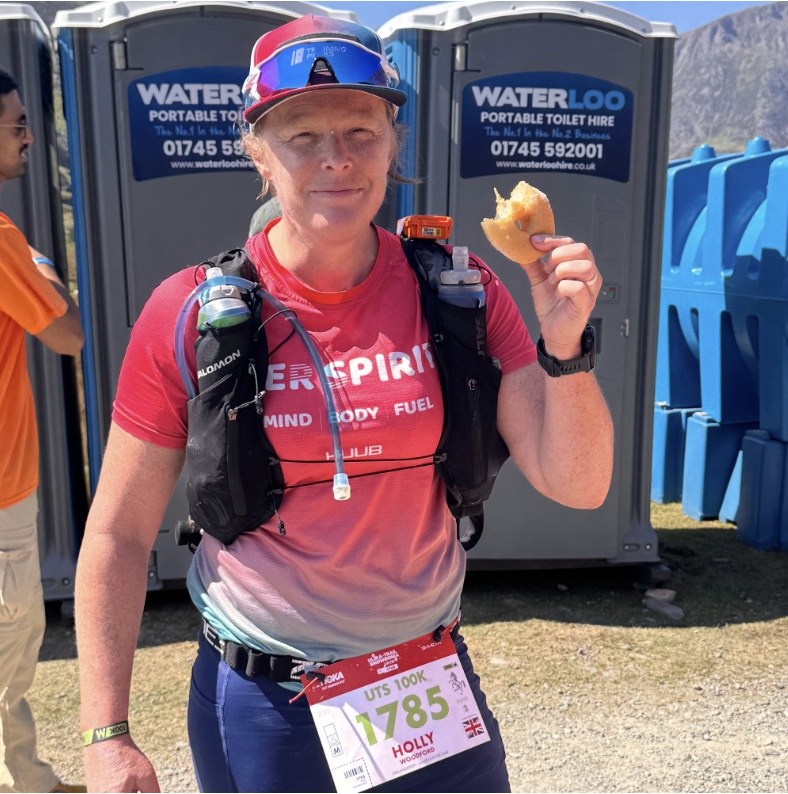 By Holly Woodford · 25 August 2026
The mountains around Chamonix have a way of pulling at something deep inside you. Every summer, thousands of runners from across the world descend on the French Alps for UTMB — the Ultra-Trail du Mont-Blanc — one of the most breathtaking and demanding ultra running events on the planet. Watching women charge through alpine trails, headtorches blazing in the dark, is enough to make anyone lace up their trainers and dream a little bigger.
If UTMB has sparked something in you, you’re in very good company. More women than ever are discovering ultra running, not just as a physical challenge, but as a genuine adventure. Before you start plotting your first big race, though, there’s one area that can make or break your experience long before the finish line: nutrition.
Getting your fuelling right is genuinely complex in ultra running. The distances are enormous, the conditions unpredictable, and your body’s needs change hour by hour. Here are five nutrition red lines or things you absolutely need to know as you begin your ultra running journey.
1. Never Underestimate How Much You Need to Eat
This is the number-one mistake new ultra runners make. Because ultras are often run at a comfortable, conversational pace, it can feel as though you’re not working that hard. You are. Cover enough hours on trail and the calorie deficit mounts rapidly. Hitting what runners call “the bonk” which means running out of glycogen. That doesn’t just slow you down; it can leave you confused, shivery and genuinely unsafe in a mountain environment.
Aim to practise eating on the move long before race day. Train your gut to accept solid food while running inlcuding energy bars, chews and real food. Products like the VOOM Pocket Rocket energy bar are specifically designed for endurance performance and easy digestion, which makes them a sensible starting point for training your stomach as well as your legs. Get comfortable eating from the first 20 minutes of any long run, not just when you feel hungry because by the time you’re hungry, you’re already behind. Aim for 60-90G per hour is recommended but must be built up over the weeks of long training runs. Your gut needs training in the same way as your legs and head!
2. Never Ignore Electrolytes — Especially Sodium
Water alone won’t save you on a long mountain effort. Sweat strips sodium, potassium and magnesium from your body, and replacing fluid without replacing electrolytes can lead to hyponatraemia — dangerously low blood sodium. Symptoms can include nausea, headaches and in serious cases, confusion. It’s rare, but it happens in ultras, almost always because runners are drinking plain water without any electrolyte replacement.
The practical answer is to include an electrolyte product in your race kit from the outset. Something like the Veloforte Passo Hydration Electrolyte Powder dissolves into your water and keeps your mineral balance in check without overwhelming your stomach. Practise with it in training, so you know exactly how your body responds before you’re standing at the start line in Chamonix.
3. Never Neglect Your Iron Levels
This one is specific to women, and it’s critically important. Female endurance athletes are significantly more vulnerable to iron deficiency than their male counterparts, and low iron directly impairs your ability to carry oxygen to working muscles, which means your training suffers, your recovery drags, and race day feels far harder than it should. If you’d like to understand more about the science behind this, our piece on why female endurance athletes should pay closer attention to their iron intake is well worth a read.
If you suffer from low iron levels then it might be worth getting a blood test before you begin serious ultra training. Eat iron-rich foods regularly — red meat, lentils, spinach, fortified cereals — and pair them with vitamin C to improve absorption. If a GP identifies a deficiency, supplement under guidance rather than guessing.
4. Never Skip Recovery Nutrition
The miles you log in training are only useful if your body can repair and adapt between sessions. Many new ultra runners are so focused on the running itself that recovery nutrition becomes an afterthought — a mistake that compounds over weeks of high-mileage training.
Within 30–45 minutes of a hard or long session, your muscles are primed to absorb protein and carbohydrates for repair and glycogen replenishment. A quality protein shake or recovery product makes this window easy to hit, even when you’re exhausted and barely able to think straight after a long weekend run. The VOOM Rapid Recovery Protein Recovery is one option designed with real ingredients and endurance athletes in mind. Build this habit early and you’ll notice the difference in how fresh you feel going into your next session.
5. Never Test Anything New on Race Day
This sounds obvious, but it still catches people out. A well-meaning crew member hands you an unfamiliar gel at mile 40. There’s an intriguing new product at an aid station you hadn’t planned for. You decide to try a different electrolyte drink because it’s available and you’re tired of your usual one.
Introducing anything new to your gut during a race — when you’re already stressed, fatigued and potentially running at altitude — is a gamble with very poor odds. Your digestive system becomes increasingly sensitive over the course of an ultra, and what your stomach tolerated on a two-hour training run may cause real trouble at hour ten.
The principle is simple: nothing new on race day. Everything you plan to eat and drink during your race should have been tested, repeatedly, in training. Experiment freely in those training months — try natural energy gels like the Veloforte Limon High-Carb Natural Energy Gel or Veloforte Mixed Energy Chews to find what sits well with you — but make your decisions long before the start gun fires.
Your Ultra Adventure Starts Here
UTMB is a spectacle that changes people. It has a habit of turning spectators into participants, and dreamers into finishers. If those mountains are calling to you, the path forward is genuinely open — ultra running has never been more welcoming to women, and the community is warm, generous and wonderfully encouraging.
Get your nutrition foundations right from the very beginning, and you won’t just survive your first ultra — you’ll arrive at that finish line knowing you gave your body exactly what it needed to get there. The trails are waiting.
More from the blog

Never miss a women-first review
Independent reviews, real-world testing and the best kit deals for active women — straight to your inbox. No spam, unsubscribe anytime.