
Why Active Women Underestimate How Much They Need to Eat, and How to Fix It
If you've ever found yourself exhausted mid-training block, struggling to recover between sessions, or feeling flat despite doing everything "right".
 By Mel Berry · 15 September 2026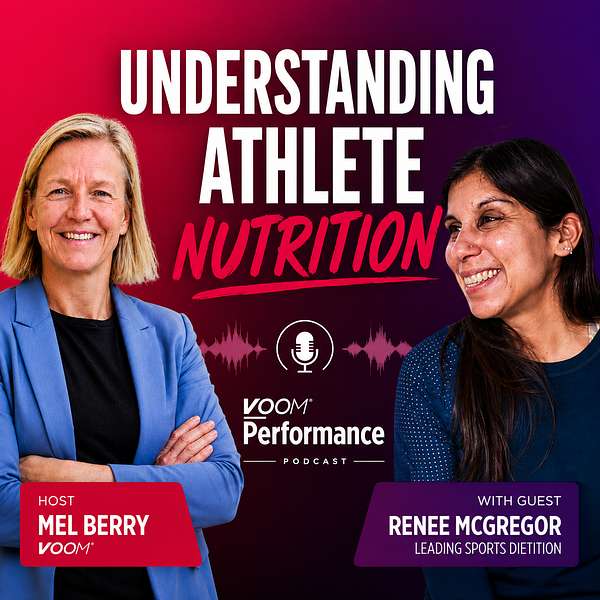
If you’ve ever found yourself exhausted mid-training block, struggling to recover between sessions, or feeling flat despite doing everything “right”.
There’s a good chance the missing piece isn’t your training plan. It’s your plate. Specifically, you may not be eating enough to support the life you’re actually living.
This is one of the core themes explored in a brilliant episode of the Voom Performance Podcast, hosted by Mel Berry, featuring leading sports dietitian Renée McGregor. It’s a conversation that every active woman should hear — not because it offers quick fixes, but because it reframes the way you think about food and performance entirely.
The Gap Between What You Think You Need and What You Actually Need
Here’s the uncomfortable truth: most active women significantly underestimate their energy requirements. It’s not a willpower issue or a lack of nutritional awareness — it’s a systematic problem rooted in how nutrition advice has historically been framed for women.
We’ve been conditioned to think about food in terms of calories burned versus calories consumed, with the implicit goal of breaking even or being in deficit. But for an active woman — whether you’re running, cycling, swimming, doing Hyrox, or training across multiple disciplines — that model is dangerously outdated. Your body needs energy to perform, to adapt, to repair tissue, to regulate hormones, and simply to function. That energy has to come from somewhere, and if training is taking more than you’re putting back in, the body starts making difficult choices — and they’re not in your favour.
What Happens When You Don’t Fuel Enough
The clinical term is Relative Energy Deficiency in Sport, or RED-S, and its effects are far-reaching. But you don’t have to reach a clinical threshold to feel the impact of under-fuelling. Many active women live in a grey zone where they’re not eating enough to support their training load, and the signs are easy to explain away: persistent tiredness, slower recovery, increased susceptibility to illness, brain fog, mood swings, and a frustrating plateau in performance despite consistent effort.
This is also closely connected to iron status, which is a particular concern for female endurance athletes. If you’re feeling chronically fatigued, it’s worth reading more about why female endurance athletes should pay closer attention to their iron intake — low iron and low energy availability often go hand in hand.
Why Women’s Needs Are Different
One of the most important conversations happening in women’s sport right now is the recognition that female physiology deserves its own research, its own guidance, and its own solutions. Dr Stacy Sims has been a leading voice in this space — you can read more about her work at Nike’s Women’s Global Sports Summit — and Renée McGregor’s work sits alongside this in deeply practical, clinical territory.
What both experts highlight is that female hormones create a shifting nutritional landscape across the month. Your carbohydrate needs, protein requirements, and even hydration status change across your menstrual cycle. Eating the same way every single day, regardless of where you are in your cycle or how hard you’ve trained, is a missed opportunity at best, and actively counterproductive at worst.
Practical Steps to Start Eating Enough
Understanding that you need more isn’t the same as knowing what to do about it. Here’s where to begin:
Anchor your meals around training. Don’t skip breakfast before a hard session, and don’t skip your post-session meal either. The window after training is when your muscles are primed to absorb nutrients — particularly carbohydrate and protein together. A recovery shake or a protein-rich snack within 30–45 minutes makes a real difference. Something like the Veloforte Nova Protein Recovery Shake is a practical option when a full meal isn’t immediately possible.
Front-load your energy. Many women under-eat during the day and overcorrect in the evening. Try shifting more of your food intake towards the earlier part of the day and around training. Overnight oats are an excellent way to start — easy to prepare, genuinely filling, and a great vehicle for carbohydrates and protein. The Veloforte Overnight Oats are a brilliant option for busy training mornings.
Don’t fear carbohydrates during exercise. During longer efforts, your body needs readily available fuel. Natural energy gels and bars can make a significant difference to how you feel and perform. The VOOM Pocket Rocket energy bar is designed exactly for this — real fuel that doesn’t sit uncomfortably during effort.
Take protein seriously, consistently. Most active women need considerably more protein than general guidelines suggest. Spreading intake across meals and snacks — rather than loading it all into one meal — is far more effective for muscle repair and recovery. The Voom Chocolate Shake is worth considering if you’re looking for a quality everyday option.
Changing Your Relationship With Food as Fuel
Perhaps the most powerful shift you can make is a mindset one. Food is not a reward for training, and it is not something to be rationed after a rest day. It is the raw material from which your performance is built. Every session, every adaptation, every recovery — it all depends on adequate fuel.
Renée McGregor’s message, at its heart, is one of permission: permission to eat more, to prioritise nutrition, and to stop treating hunger as something to override. For active women who have spent years being told to shrink, that permission can be genuinely transformative.
Listen to the full conversation on the Voom Performance Podcast — it’s one of those episodes you’ll come back to again and again. And if it prompts you to take a closer look at what’s on your plate, that’s exactly the right starting point.
More from the blog

Never miss a women-first review
Independent reviews, real-world testing and the best kit deals for active women — straight to your inbox. No spam, unsubscribe anytime.